About The WRENN Report
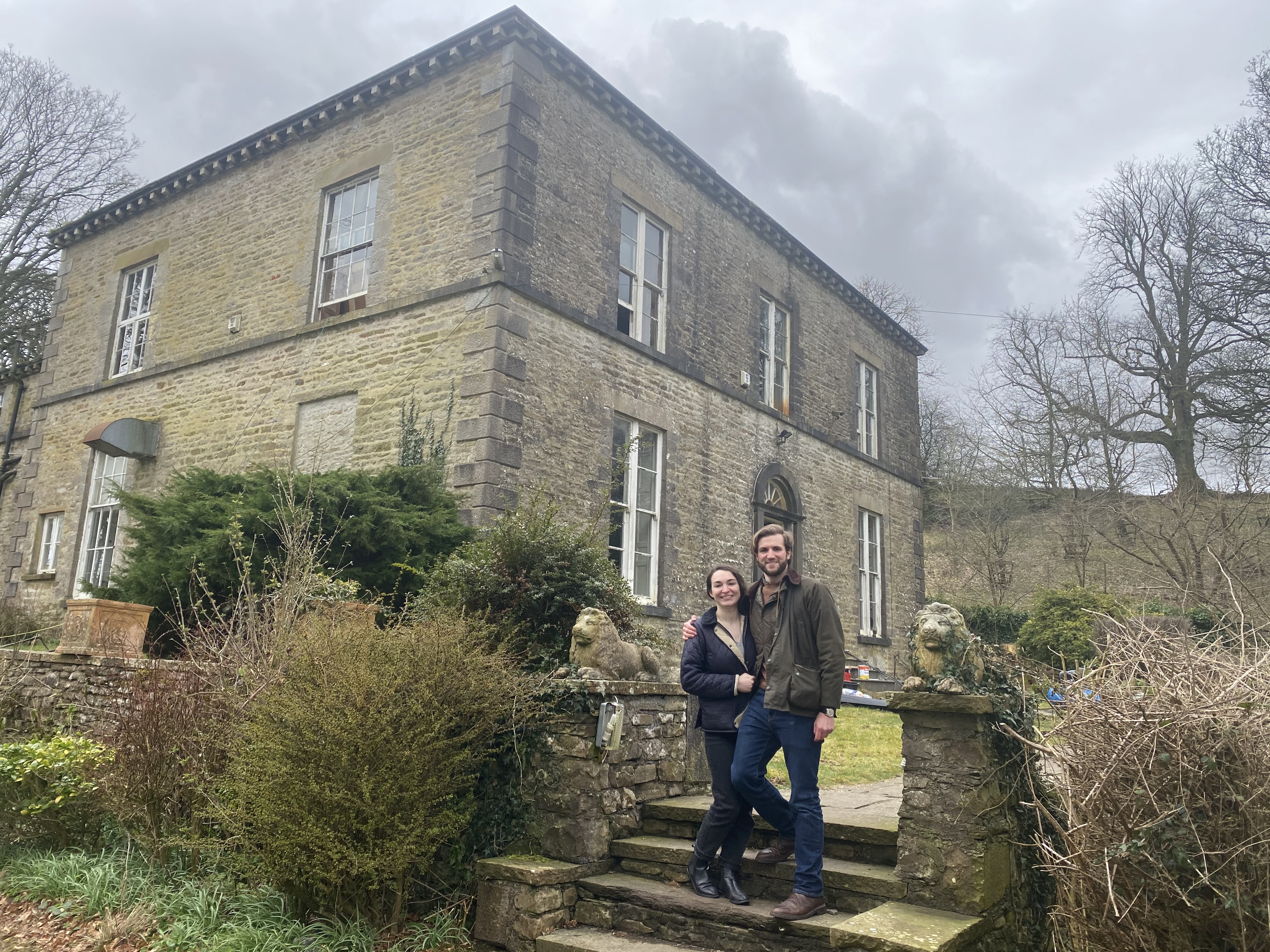
On Valentine’s Day 2020, my wife and I went to see a Georgian house in the Yorkshire Dales. We were living in Germany at the time and had only just started thinking about moving back to the UK. COVID hit (pandemic-era hairstyle on full display in the picture) and we didn’t act on our visit, but we kept talking about that house. And I started learning about listed buildings.
In March 2021, seeing it was still on the market, we took the plunge and bought it. So began what became a five-year odyssey to restore it. In the course of that my wife and I built All Paint Colours to help match paint colours and identify ones suitable for lime plaster, among other things.
In my professional life I run Demeter, a data company focused on the agricultural system. Naturally that has meant that the more time I spent looking at listed buildings, the more I felt compelled to try and find some order in the extraordinarily rich but often chaotic world of heritage data.
The result is The WRENN Report — a project to help everyone interested in the UK’s listed buildings understand what is going on and how it all fits together. This is and will remain a work in progress. Feedback and suggestions are most welcome.
I hope you find it useful!
Hugh Macfarlane
Data quality
The WRENN Report draws on public data from Historic England, Historic Environment Scotland, Cadw, the NI Department for Communities, the EPC Register, HM Land Registry, the Environment Agency and others. Where possible we cross-reference and validate, but with 493,181 buildings and 897,893 planning applications there will be errors — particularly in the matching of applications, energy certificates and sale records to individual buildings. If you spot something wrong, please let us know.
What's in the dataset
The site assembles every public dataset that touches a UK listed building — the registers themselves, planning applications, Energy Performance Certificates, Land Registry sale prices, flood and radon risk, and architect attributions — linked together at the building level. For a full breakdown of sources, coverage, licensing and known limitations, see the data page.
Get in touch
For questions, corrections or anything else: [email protected]